Extravagantly welcoming and affirming followers of Christ called to embody God’s unconditional justice and love.
Last year, I began reaching out to clergy across the Southwest Conference with a request to submit their current call agreements and Three-Way or Four-Way Covenants. This was more than a routine administrative task or a simple check-in on record keeping. It was an invitation to revisit the very heart of our shared identity. In the United Church of Christ, we are a covenantal people. If we claim to live in such a relationship, we should be able to point to where that covenant is written and retained. Healthy governance requires this balance of relational clarity and accurate documentation, ensuring that our shared promises are both lived and recorded.
This identity shapes how we understand authorization, which is the formal recognition that an individual is called and prepared to serve. In our tradition, ministers are never authorized independently of the wider church. Their standing exists within a web of covenantal relationships. That recognition is expressed through a Three-Way Covenant linking the minister, the local church, and the Conference, or through a Four-Way Covenant that includes an employing institution or ecumenical partner. Through these documents, the wider church affirms that a specific ministry is not a solo endeavor, but one accountable to and supported by the whole Body.
Because we do not operate through hierarchical control, our accountability flows directly from these mutual commitments. It is helpful to distinguish between a call agreement, which addresses the practical terms of employment and compensation, and a covenant, which names the ecclesial bond.
The journey toward decentering whiteness can sometimes feel isolating, but you are not alone. There are congregations across the Southwest Conference engaged in this work, and hearing from them can be both inspiring and informative. Stories are a powerful way to build community, share wisdom, and remind us that we are all on this path together.
Our website will be a dedicated space for these stories. We are collecting videos and testimonials from churches as they share their experiences, learnings, and challenges. By sharing your story, you can help to inspire and encourage other congregations to begin their own work. We want to hear from every stage of the journey—from those just starting to those who have been at it for a while. Your story, no matter where you are, is valuable.
Click through to read more.
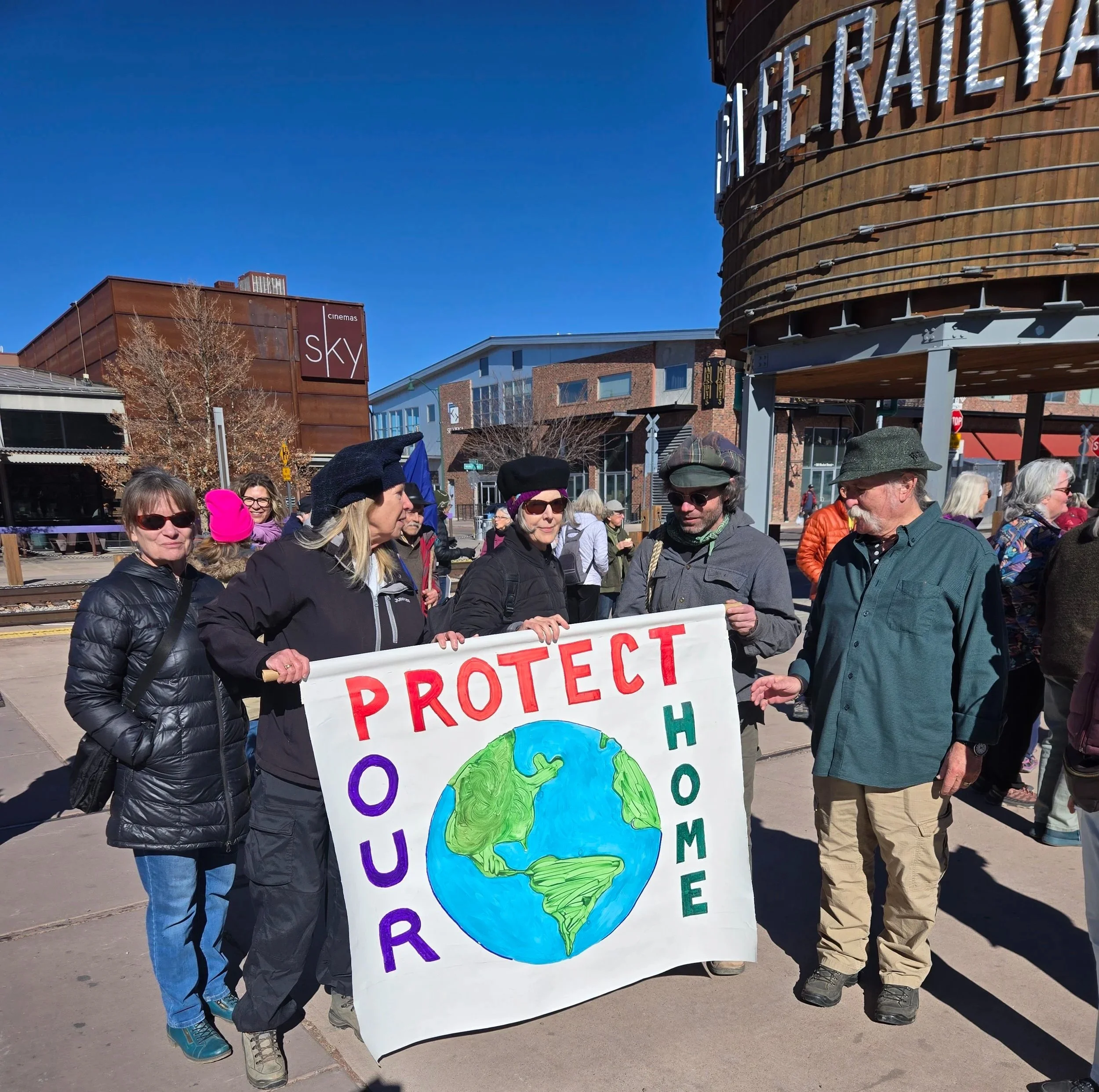
Members from Taos United Community Church joined the climate pilgrims from Interfaith Power and Light on Thursday, February 5 in Santa Fe as the pilgrims finished their walk from Carlsbad, NM to the state Capitol, the "Roundhouse" in support of the Clear Horizons bill.
Much respect, gratitude, and admiration to these three who made the walk from Carlsbad:
Desirée Bernard: Executive Director of the New Mexico and El Paso branch of Interfaith Power & Light.
Rev. Clara Sims: Associate minister at the First Congregational United Church of Christ in Albuquerque and a team member with NM-IPL.
Jim Ekstrand: Marketing & Communications Lead at NM-IPL and a spokesperson for the group.
Read more in this article, “Faith-based climate advocates arrive at state Capitol after 300-mile trek” in the Santa Fe New Mexican.